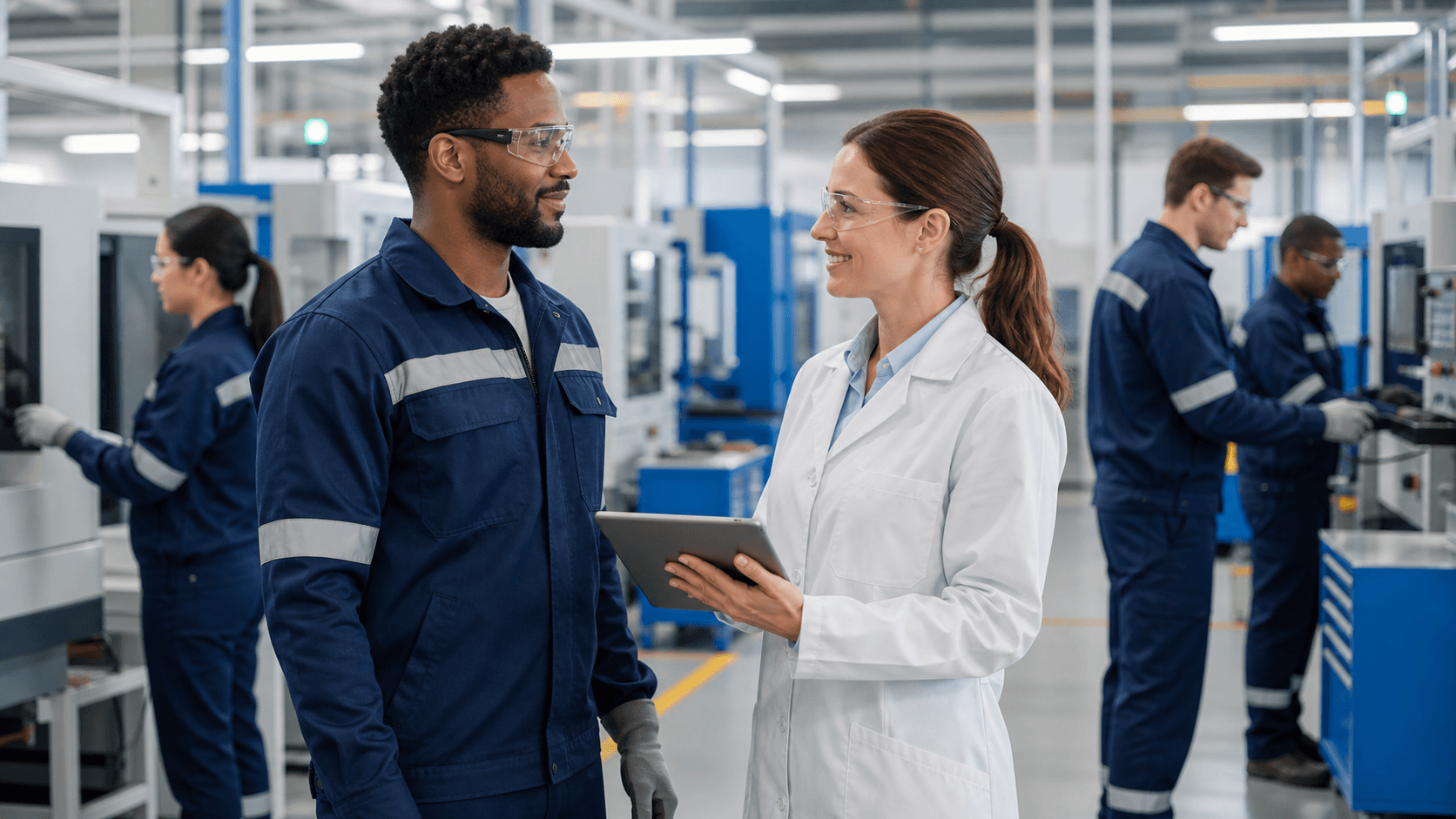
Build a Safer, Stronger Multi-Shift Workforce
Post-hire safety screening matters just as much as pre-employment checks in a busy manufacturing plant. Pre-hire, you are asking, "Should this person join us?" Post-hire, you are asking, "Is this person safe to work today, on this shift, in this role?" That second question protects people, production, and your brand.
Multi-shift operations are tricky. Rotating nights, overtime, seasonal peaks, cross-training on different lines, all of that adds stress and risk. Fatigued or distracted workers can turn a small issue into a serious incident very fast. That is why a clear manufacturing safety screening plan after hire is so helpful.
In our work with employers, we see the best results when companies build a fit-for-duty program that ties together three things:
- Smart trigger events that start safety checks
- Clear, fair return-to-work steps
- Strong compliance guardrails that guide every decision
Defining Fit-for-Duty in Modern Manufacturing
Fit-for-duty is simple to say, but not always simple to apply. At its core, it means a worker can safely and effectively do the important parts of the job at the time they show up for a shift, not just when they were first hired.
Real fitness for duty touches several areas:
- Physical capacity, like lifting, climbing, standing, or fine motor skills
- Cognitive readiness, like focus, memory, and decision-making
- Medication and substance use that might affect alertness or reaction time
- The effect of long, rotating, or overnight shifts on energy and judgment
When you define fit-for-duty in plain language, it supports your whole operation. It helps:
- Write job descriptions that match actual tasks and risks
- Shape safety training that speaks to real hazards on each shift
- Guide ADA-compliant accommodation decisions when someone has limits
- Inform post-incident reviews so you are asking the right questions
A strong definition gives HR, EHS, and supervisors the same playbook. That way, the night shift is not guessing while the day shift has clear rules.
Smart Trigger Events That Activate Safety Screening
You probably do not want to screen everyone, all the time. The smarter path is to set clear trigger events that start targeted manufacturing safety screening when risk is higher.
Common high-impact triggers include:
- Recordable injuries or medical treatment beyond basic first aid
- Near-miss events that could have caused real harm
- Damage to equipment, tools, or product tied to human error
- Reported concerns about possible substance use on the job
- Repeated safety rule violations, especially in safety-sensitive roles
Multi-shift plants have extra triggers to think about:
- Split or double shifts that stretch work hours
- Seasonal ramp-ups when new hires and temps flood the floor
- Frequent shift swaps that confuse who is where and when
- Back-to-back overtime after already long weeks
The key is to bake screening into your normal flow:
- Incident reports can include simple check boxes that signal HR or Safety
- Supervisor observations can feed into a standard review form
- EHS metrics can flag patterns that point to targeted screenings
The goal is not to punish people. It is to catch risk early, keep folks safe, and give workers clear support when something might be off.
Designing Practical Return-to-Work Playbooks
When someone is injured, has a medical event, or is pulled from duty for safety reasons, the next big question is: how do they come back? Guesswork here leads to confusion and mistrust. A written return-to-work playbook keeps things clear.
Most plants benefit from tiered paths:
- Full duty: the worker is cleared to resume all tasks and shifts
- Transitional duty: limited tasks that match current ability
- Restricted duty: short-term, tightly defined tasks or schedules
Each path should have simple, documented criteria. You might include:
- Post-injury medical exams from qualified occupational health providers
- Drug and alcohol testing when appropriate and allowed by law
- Functional capacity evaluations tied to actual job demands
- Clear, consistent communication with healthcare providers and HR
Multi-shift operations also need cross-shift continuity. Workers returning on nights, weekends, or holidays deserve the same:
- Safety briefings before they step back into the line
- Documentation in HR and scheduling systems
- Supervisor instructions so expectations do not change from shift to shift
When everyone knows the steps, workers feel supported, and supervisors are not making it up under pressure.
Compliance Guardrails That Keep You Out of Trouble
Any post-hire safety screening program needs strong compliance guardrails. You want safety without unfair treatment or legal surprises.
Key areas to keep on your radar:
- OSHA rules for recording and reporting work-related injuries
- ADA and FMLA considerations when health and leave come into play
- State-specific rules on drug testing and occupational health screening
Post-hire compliance is different from pre-hire. Once someone is on your payroll, you have:
- Different privacy expectations around medical and screening records
- Adverse action steps that may still apply when job status changes
- Stronger needs for clear documentation to explain decisions
Standardization helps avoid bias and claims of retaliation. That means:
- Written policies that spell out trigger events and responses
- Consistent use across shifts, sites, and job groups
- Supervisor training, especially for night and weekend leads
- Auditable workflows so you can show what happened and why
Good guardrails do not slow you down. They guide fast, fair, repeatable choices.
Using Data, Tech, and Monitoring to Stay Ahead
Safety programs work best when HR, safety, and operations data speak to each other. When those pieces connect, patterns show up before major problems do.
Integrated data can highlight:
- Repeat injuries in certain roles, on certain lines, or under certain supervisors
- Rising near-miss rates on specific shifts, like overnight or weekend crews
- Clusters of fatigue-related events during seasonal peaks or heat waves
Continuous monitoring can support those insights. This might include:
- Ongoing license and credential checks for safety-sensitive roles
- Periodic manufacturing safety screening for high-risk positions
- Role-based alerts when certain conditions or trigger events appear
This is where a service-first screening partner comes in. With fast turnaround, configurable rules, and smooth HR tech integration, screening can run quietly in the background while your supervisors stay focused on people and production.
Turning Post-Hire Screening Into a Safety Advantage
When your post-hire screening and fit-for-duty program is clear, fair, and consistent, it stops feeling like surveillance and starts feeling like support. Workers know the rules, know what happens if something goes wrong, and know that safety is more than a slogan on a poster.
For most manufacturers, practical first moves look like this:
- Review current policies and forms with HR, Safety, and Operations together
- Define fit-for-duty in simple language that matches each key role
- Map your trigger events and match them to specific screening steps
- Prioritize high-risk roles and shifts for early rollout and extra training
At ClearStar, we focus on helping employers build programs that protect people, keep operations running across every shift, and stay compliant without a lot of drama. A thoughtful post-hire safety screening and fit-for-duty program can turn your multi-shift schedule from a risk multiplier into a real safety advantage.
Protect Your Workforce With Confident, Compliant Hiring Decisions
Our manufacturing safety screening services help you identify risks before they reach the production floor, so you can protect your people, equipment, and reputation. At ClearStar, we combine industry-focused checks with intuitive technology to make your screening process faster and more reliable. Partner with us to build a safer operation that meets both regulatory requirements and your own high standards. If you are ready to get started or have questions, contact us today.