Hire with Confidence: Why Occupational Health Matters
Occupational health screening sits right at the intersection of safety, hiring, and employee care. When a new hire in a safety-sensitive role experiences a preventable health incident at work, it does not just affect that one person. Co-workers scramble to cover shifts, production slows, managers complete incident reports, and everyone starts asking the same question: could this have been prevented with better screening?
Occupational health screening is simply a structured set of medical checks that help confirm whether a candidate can safely and effectively perform the essential functions of a job. It is not about collecting every possible health detail; it is about aligning real job demands with real human capabilities. When we get that alignment right, organizations hire with more confidence, protect employees and the public, and support a healthier, more productive workforce overall.
At ClearStar, we focus on making that alignment practical. Our online employment background screening and occupational health platform is built to help organizations, especially those in regulated and safety-sensitive industries, bring occupational health screening into a fast, compliant, technology-driven process that fits smoothly into a wider background screening strategy.
What Occupational Health Screening Really Covers
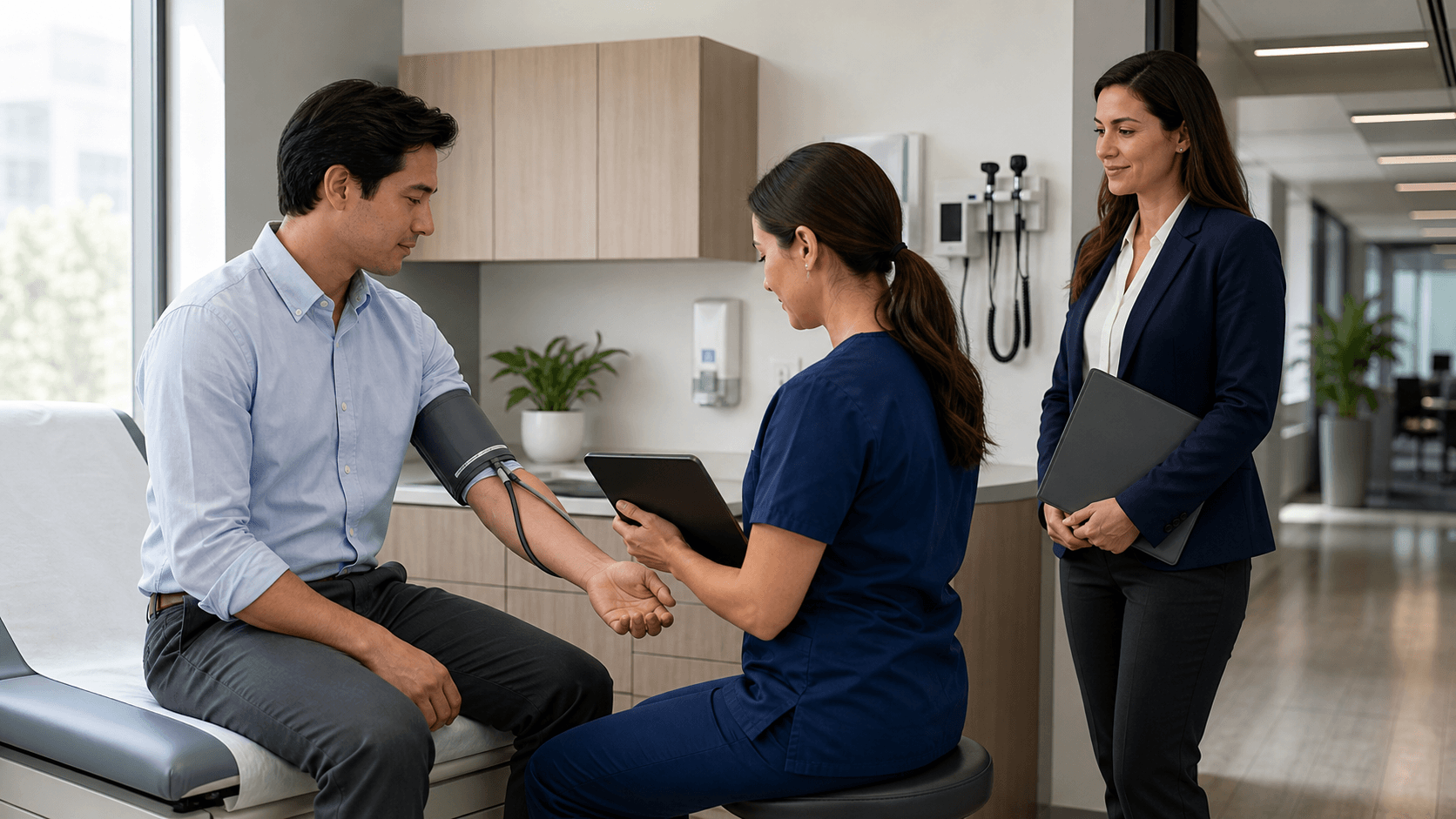
Occupational health screening can sound intimidating, but in practice it is a specific mix of exams and tests tailored to the job. Think of it as a custom safety toolkit built for each role.
Common components often include:
- Physical exams that assess general health, strength, mobility, and the ability to meet job demands
- Drug and alcohol testing for roles where impairment creates safety or compliance risks
- Vision and hearing checks to confirm that sensory demands of the role can be met
- Respiratory exams for positions involving airborne exposures, respirator use, or confined spaces
- Fitness-for-duty assessments that tie it all together based on defined job requirements
The key is that job duties drive the screening, not the other way around. For example:
- DOT-regulated drivers may require specific medical certifications, drug and alcohol testing, and periodic recertifications
- Healthcare staff with patient contact might need immunization verification, TB testing, or other role-specific checks
- Warehouse, construction, and manufacturing employees may be screened for lifting ability, balance, and respiratory fitness
- Other safety-sensitive positions often combine several of these components in a single, coordinated process
Legally and ethically, the focus must be on the candidate's ability to perform essential job functions. That means:
- Avoiding broad, unrelated health questions
- Targeting assessments to documented job requirements
- Using clear criteria for pass, fail, or accommodation review
A platform like ClearStar helps employers coordinate the right mix of exams and tests for each role, so HR and hiring managers are not guessing which screening applies where or chasing paper forms across clinics and departments.
Compliance, Privacy, and the Legal Tightrope
Occupational health screening is surrounded by a web of rules, especially for employers in heavily regulated industries. Federal laws such as the Americans with Disabilities Act (ADA), the Fair Credit Reporting Act (FCRA), and Department of Transportation (DOT) regulations all shape what can be done, when, and how. State and industry-specific guidelines add another layer.
To stay on the right side of the law, employers need to be clear on a few fundamentals:
- Medical inquiries generally must come only after a conditional job offer
- Health information must be kept separate from general HR files and treated as confidential
- Results must be used only for job-related decisions, tied to documented essential functions
- Adverse decisions based on screening results have to follow required FCRA notices and steps when applicable
Common pitfalls tend to look like this:
- Applying different screening standards to similar roles, which can raise fairness and discrimination concerns
- Collecting more health data than necessary for the job, which increases privacy risk
- Skipping or rushing consent, disclosures, or adverse action processes that should be standardized
By using a compliant screening platform and working with knowledgeable partners, organizations can centralize documentation, standardize workflows, and track the details that often cause problems when handled manually. The result is lower legal risk and a process that still feels respectful and clear for candidates.
From Checkboxes to Strategy: Building a Safer Hiring Program
Occupational health screening should do more than tick boxes on a form. It works best as part of a broader risk management strategy that might include:
- Background checks aligned with role sensitivity and regulatory expectations
- Drug and alcohol testing policies that are job-related and consistently applied
- Ongoing monitoring or periodic rechecks for certain regulated or safety-critical positions
A helpful starting point is a role-based screening matrix. That typically involves:
- Listing essential job functions and physical or environmental demands for each role
- Identifying the health and safety risks that come with those demands
- Matching each job type with the appropriate exams, tests, and frequencies
- Documenting criteria for what constitutes clearance, restriction, or need for accommodation review
This is not something HR should do alone. Strong programs usually involve HR, safety teams, legal advisors, and operations leaders working together to:
- Create consistent policies that are easy to explain and defend
- Review policies regularly as regulations, equipment, or job designs change
- Train hiring managers so they know when and how screening applies
ClearStar's technology is designed to support that strategic approach. By automating workflows, scheduling, and reporting, organizations can shift occupational health screening from a slow, paper-heavy burden to a streamlined, data-informed process that connects cleanly with background checks and other pre-hire steps.
Candidate Experience Without the Headache
From the candidate's perspective, occupational health screening can feel like walking into a mystery. They may be worried about what is being tested, how results will be used, and whether a medical condition will be misunderstood or unfairly held against them. That anxiety can sour an otherwise positive hiring experience.
Employers can do a lot to keep the process clear and respectful:
- Provide straightforward explanations of what tests are required and why they relate to the job
- Share step-by-step instructions before the appointment, including what to bring and how long it might take
- Offer flexible scheduling options and accessible locations where possible
- Communicate how privacy is protected and who will see which parts of the results
Digital tools make this smoother for everyone. Mobile-friendly forms, online consent, and real-time appointment status updates cut down on confusing email chains and reduce no-shows. When candidates can track their progress and know what comes next, they feel more in control.
When occupational health screening is handled thoughtfully, it sends a clear message. It tells candidates that the organization takes safety seriously, values their well-being, and wants them to succeed in the role, not just pass a test.
Turn Insights Into Action for Safer, Smarter Hiring
Occupational health screening provides a steady stream of insight about the physical and safety demands of work. The question is whether that insight is scattered across folders and inboxes or feeding a smarter hiring approach.
It is worth stepping back and asking:
- Are our forms, role criteria, and policies current and consistent by job type?
- Do we collect only the health information we truly need?
- Where are manual steps slowing us down or creating room for error?
- How well do occupational health results connect with background checks and overall hiring decisions?
From there, organizations can refine their screening matrix, tighten compliance practices, and evaluate how technology might centralize background and occupational health screening into a single, coherent process. When that happens, safety-sensitive hiring feels less like a maze of checklists and more like a clear, confident pathway to safer workplaces, reduced risk, and hiring teams who trust the decisions they make.
Protect Your Workforce With Streamlined Health Screening Solutions
If you are ready to create a safer, more compliant workplace, we can help you build a tailored occupational health screening program that fits your organization's needs. At ClearStar, we work with you to simplify the process, reduce administrative burden, and support faster, more confident hiring decisions. Reach out to our team today to discuss your goals or request a customized quote through our contact page.